
When your child reads a word or a page aloud, Zupzi Read can listen and answer. Listening happens on the device only, the microphone stays off until a grown-up turns listening on, and your child's voice is never recorded, stored or sent anywhere: the sound stays in memory until it is judged. If the app isn't sure what it heard, it asks to try again instead of correcting.
- On the device
- Off until a grown-up says yes
- Voice never recorded
- Lessons only encourage
Nothing listens until a grown-up says yes
When a grown-up adds a reader, the app asks whether it can listen when the reader reads aloud, and says: “The voice is heard on this device only. It is never recorded, stored or sent anywhere. Without it, the reader taps a word to hear it, and a grown-up can check the reading.” You can change it any time in Grown-ups › Listening (“Allow listening in lessons”). After that yes, the iPhone or iPad still asks its own microphone permission, and the microphone turns on only while the reader reads aloud.
How it listens
Four speech recognizers run on the device, side by side, on the same few seconds of sound: two from Apple and two open models that ship inside the app. Words are compared by how they sound, using the CMU Pronouncing Dictionary, not by spelling. Apple's two recognizers need their English voice pack, a one-time download a grown-up starts from Grown-ups › Listening (“Needs internet once.”). The two inside the app come with it.
What your child hears
- Read it: “You read it! Great job.” or “Wow, great reading!”
- Not heard well: “Let's try that one again.”
In lessons and books, listening never corrects: it praises the words it hears and asks to try again when it isn't sure. Only in the Reading check with a grown-up, from age 6, it may say a word needs help (“Let's read it together.”), when none of the recognizers heard the right word and at least three heard a different one, twice in a row; then it reads the word with your child. Under 6 (or with no age set), listening only encourages. With only two recognizers ready, it never corrects. If it can't hear well four times in a row (noise or distance), the lesson switches to tap-to-read and you get a note.
What the grown-up sees
In the Reading check, your child reads 10 words aloud and, on a card just for you, the app asks “Did the reader read it right?”: you tap “Read it right” or “Not right”. At the end it shows how many times it wrongly corrected your child. Reading aloud never decides progress on its own: tapping and building words do, and so does a grown-up's “Got it” on the letter cards of a session together.
What stays on the device
The sound itself is never saved. What the device keeps is a diary of each session, including the words the app heard, in Grown-ups › Reading diary: “Every session is written to a diary on this device. It never leaves the device unless you share it.” Zupzi has no server and never gets a copy; like all app data, the diary is included in your device backups, if you make them.
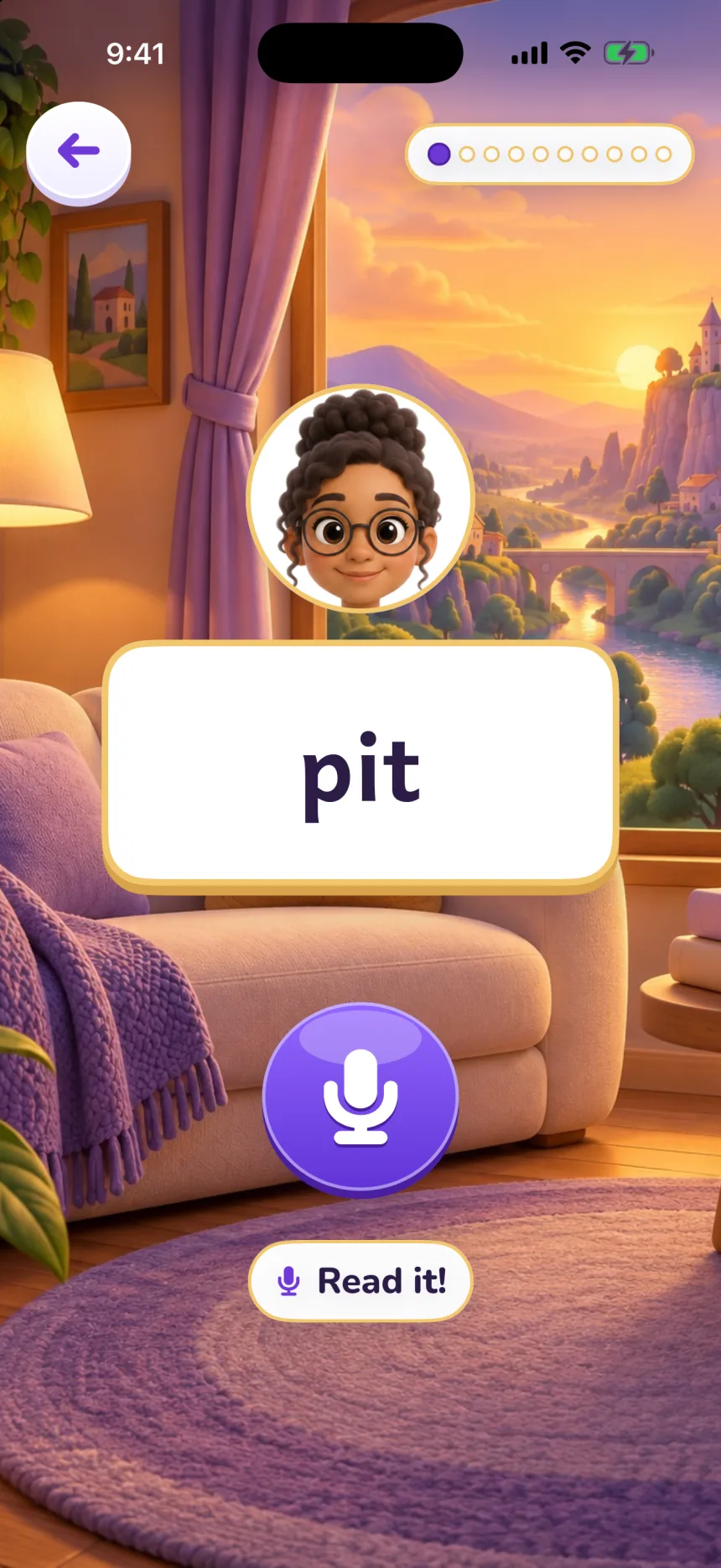
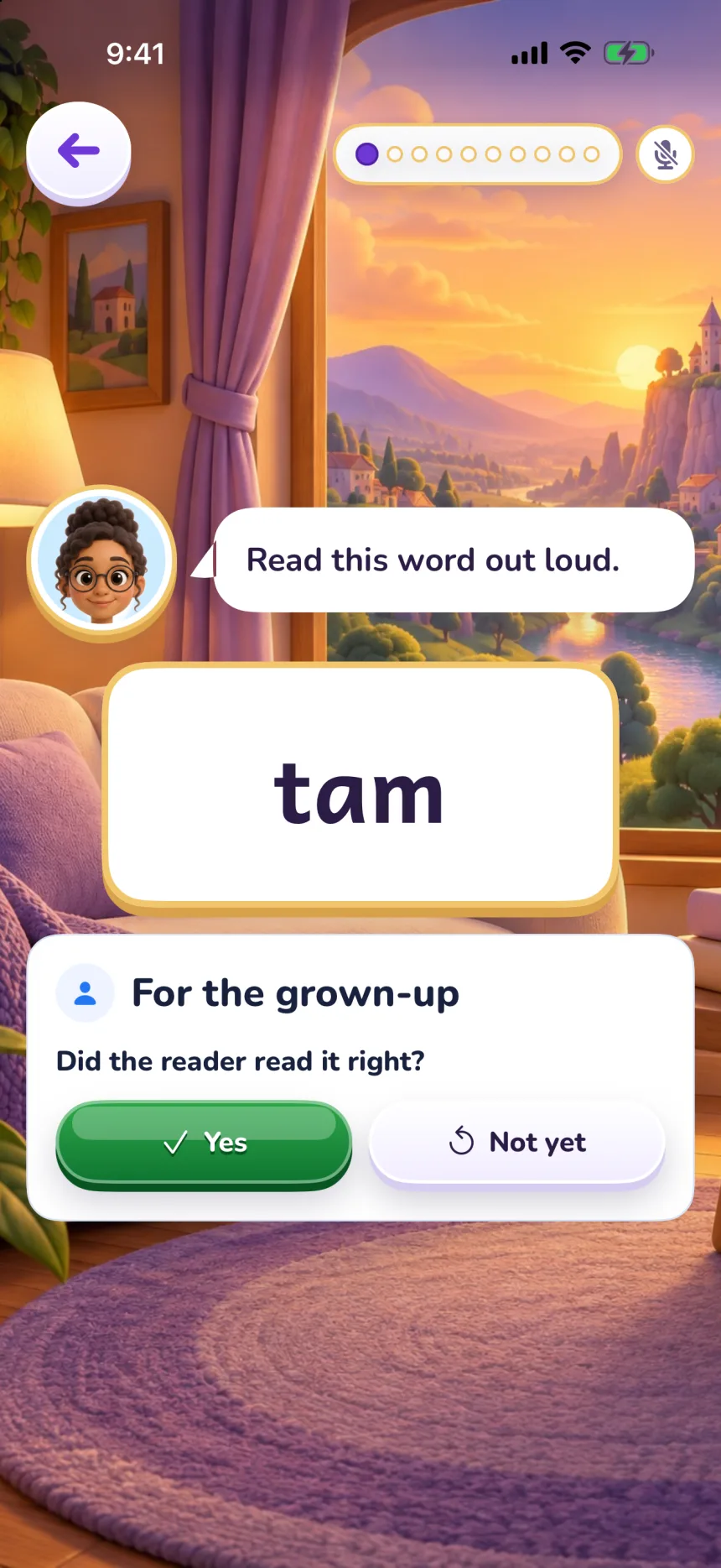
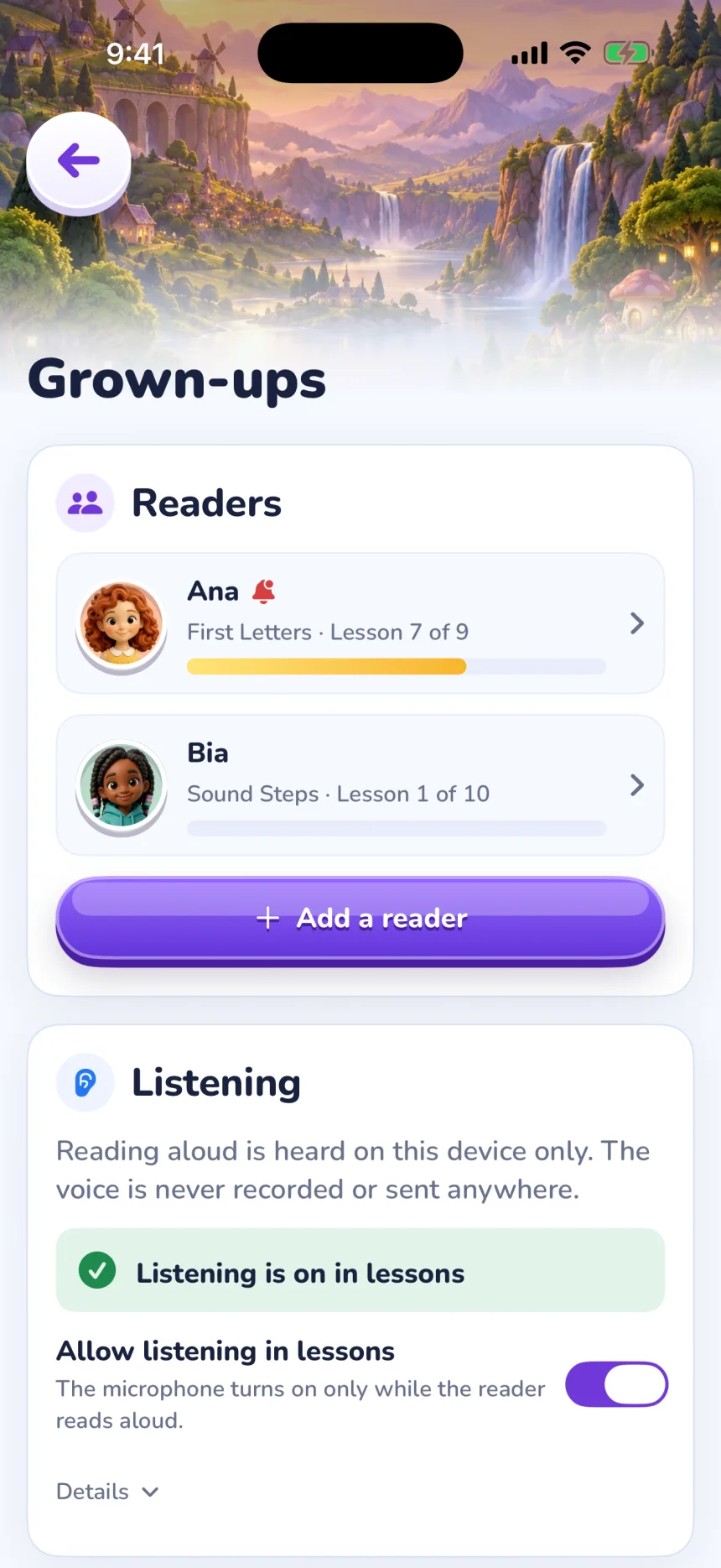
Real screens from the app, in the iPhone simulator, with a test reader.
Questions
Does Zupzi Read record my child's voice?
No. The sound stays in the device's memory until it is judged and is never written to storage or sent anywhere. The device keeps a diary of each session with the words the app heard; Zupzi never gets a copy, unless a grown-up shares it.
Does the microphone turn on by itself?
No. It stays off until a grown-up allows listening, and then turns on only while the reader reads aloud.
Does listening need the internet?
Two of the four recognizers come inside the app. The other two are Apple's and use its English voice pack, which a grown-up downloads once. With only two recognizers ready, the app listens but never corrects.
What if we don't allow listening?
Lessons, books and the reading check work by tapping instead: your child taps a word to hear it and taps “I read it!” in books, and in the reading check you tap whether each word was read right.
Will the app tell my child they got a word wrong?
Not in lessons or books: there it only praises or says “Let's try that one again.” In the Reading check with a grown-up, from age 6, it may say a word needs help when it is quite sure (at least three recognizers heard a different word, twice in a row).
More about Zupzi Read
- Scope and sequence
- How a lesson works
- Decodable books
- An app that listens
- With a grown-up
- Wi-Fi, ads and purchases
- The method, with sources
Or follow the path, topic by topic: